










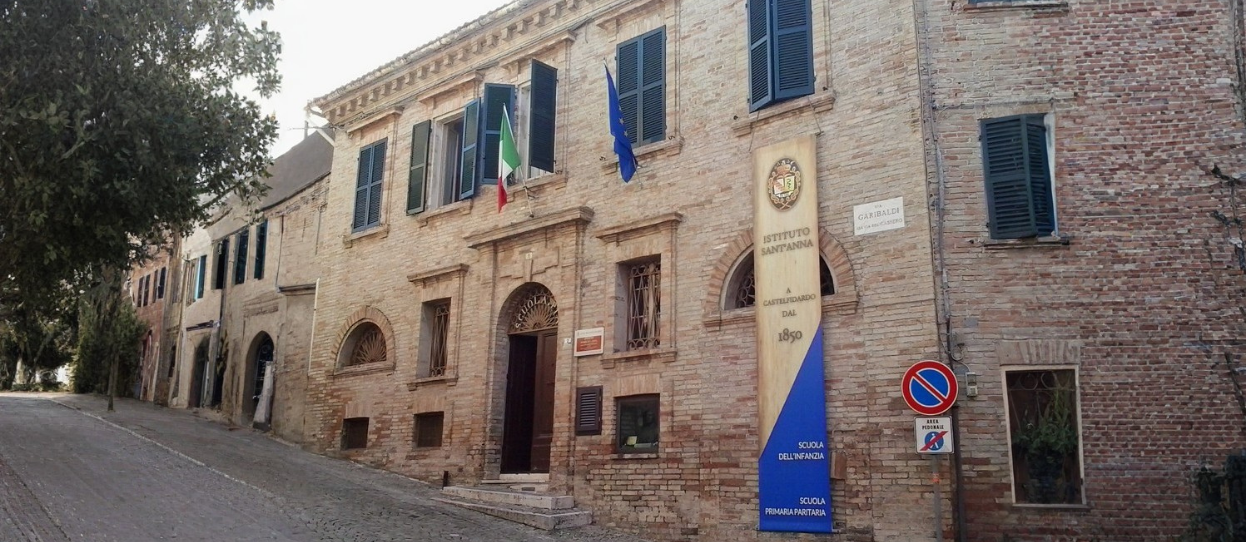
The Sant’Anna Institute of Castelfidardo was founded in the first half of the 19th century. In 1835, the City Council of Castelfidardo began discussing the need to provide elementary education. The task was thus entrusted to the Congregation of the Sisters of Sant’Anna, founded in Turin, Italy by Carlo Tancredi Falletti and Giulia Colbert, the Marquis and Marchioness of Barolo in 1834. After sending their secretary Silvio Pellico to Castelfidardo to learn about the local situation, the congregation purchased Palazzo Tomasini, which remains the school's headquarters till today. On April 17, 1850, the first five teachers arrived, and school activities began. Since then, the school has remained deeply connected to the local community, and over the years, it has continued to evolve to respond to changes in society and the Italian education system. Since 2001, the elementary school has been recognized as a private primary school, "Sant'Anna." One of the hallmarks of the Sant'Anna Institute is its focus on the so-called "pedagogy of the heart." This educational approach is not limited to the transmission of academic knowledge, but rather aims to foster the complete formation of the individual. Pedagogy of the heart is based on several fundamental principles, such as the centrality of the child, education in human and Christian values, attention to relationships, and collaboration between school and family in the educational process.
The Educational Mission
Today, Sant'Anna Institute continues to pursue its educational mission, combining tradition and innovation. The school aims to educate children who are competent, responsible, and open to dialogue, keeping Gospel values and collaboration with families at its core. In addition to its educational and value-based approach, in recent years the institute has introduced numerous activities related to new technologies and future skills. Among the most important initiatives are computer science and coding lessons, aimed at strengthening digital skills; in-depth study of the English language; and space for creative and interdisciplinary workshops. The Sant'Anna Institute represents an important point of reference for the Castelfidardo community. Its long history, which began in the 19th century, continues today through an educational project that combines values, cultural education, and digital innovation, keeping alive the idea of an education capable of engaging the mind, heart, and human relationships.
.The following key staff members will be directly involved in the project:
- Alessandro Rossini is a primary school teacher in Castelfidardo. He holds a Master’s degree in Primary Education, which qualifies him to teach in primary and nursery schools. He also holds a Master’s degree in Educational Sciences, with a view to pursuing a career as an educationalist in the future. He has a postgraduate specialisation in support activities for primary schools and a first-level Master’s degree in inclusion. Over the years, he has run courses for teachers and children on coding and robotics, and the STEM subjects in general.
- Silvia Leandrini has a master's degree in Primary Education Sciences, with a Master in Montessori Education. She's teaching STEAM subjects in a Primary School in Castelfidardo (Ancona, Italy). She attended courses and workshops on educational robotics and coding. Silvia loves proposing students learning through hands-on workshops.
- Sara Magnaterra has a master's degree in Primary Education Sciences that qualifies her to teach in kindergartens and primary schools. She is also specializing in Montessori Education. Sara is teaching at the primary school in Castelfidardo (Ancona, Italy). She has attended training courses and workshops on coding and educational robotics, however she prefers anthropological disciplines.
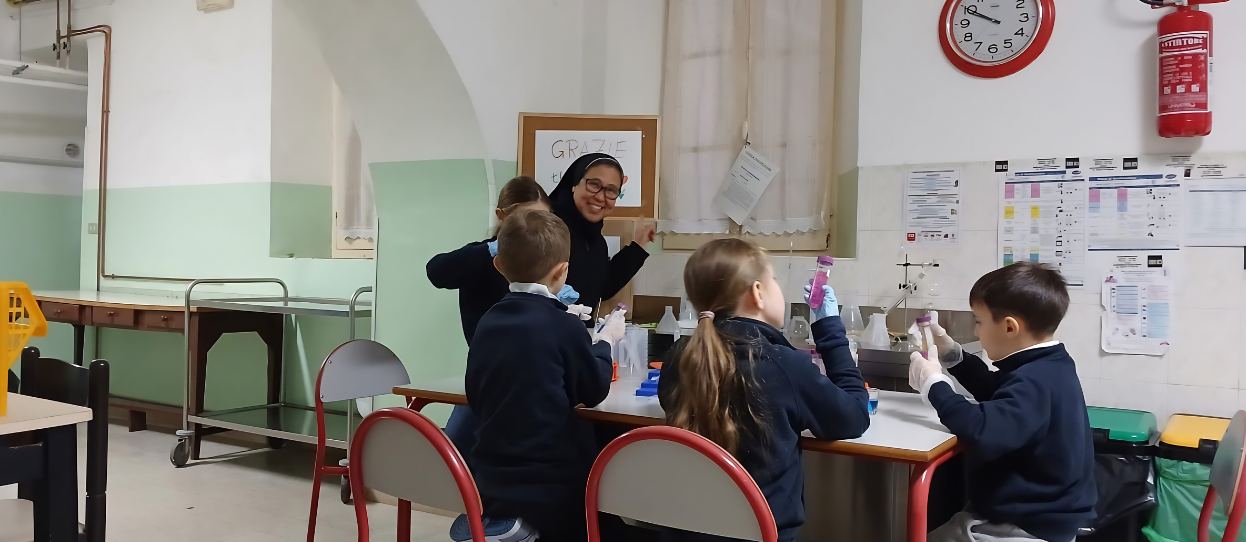
- Sister Gloria Ignacio Padayhag is currently the superior and administrator of Sant’Anna Institute of Castefidardo. She holds a degree in Industrial Chemistry from the University of Turin, Italy and a Bachelor’s degree in Religious Studies. She is active in promoting activities related to new technologies and future skills.